DIRECT ANSWER
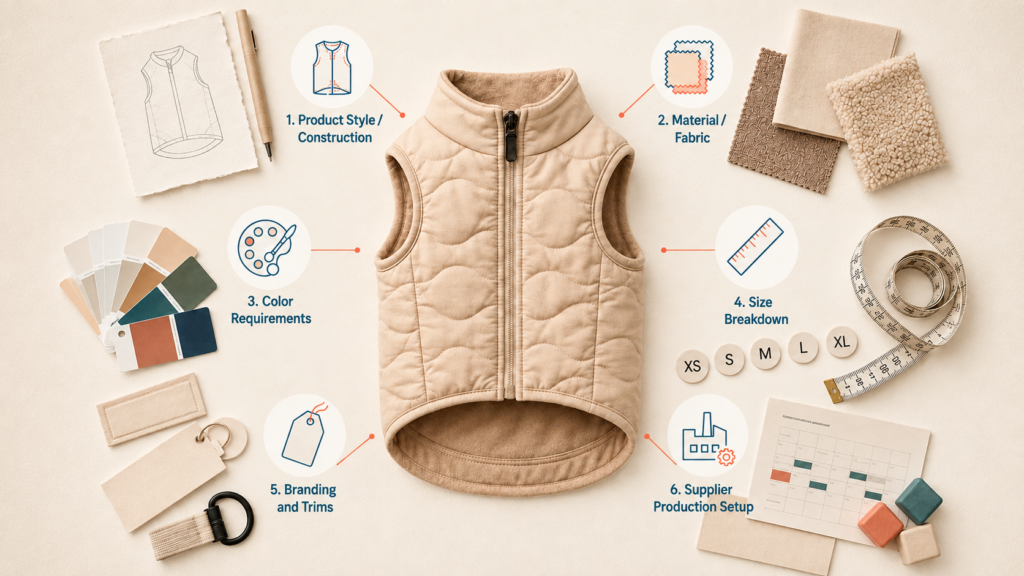
Pet apparel MOQ is rarely one universal number. It can change according to product construction, material availability, color requirements, size breakdown, branding components and the production setup used by the supplier. An existing or available style may support a different order structure from a fully custom product that requires new patterns, materials or trims. For buyers, the useful question is therefore not only “What is the MOQ?” but also “Which requirements are creating it?”
In This Guide
Why Pet Apparel MOQ Is Not One Fixed Number
Pet apparel MOQ is usually the result of several production variables working together rather than a single number that applies to every style. Two products that look similar to a buyer may require different materials, patterns, trims, sewing steps or production arrangements.
An available supplier style may already have an established construction and accessible materials. A more customized product may require new pattern work, specific fabrics, different colorways or additional branding components. Each of these requirements can change how a supplier evaluates the order.
For buyers, this means the most useful MOQ discussion starts with the product specification rather than the quantity alone. Instead of asking only, “What is your MOQ?”, it is often more useful to understand which parts of the project are flexible and which requirements are essential.
A clearer product brief also makes supplier comparisons more meaningful. One supplier may be quoting an existing product with minor changes, while another may be evaluating a more customized development route. The quoted quantities may therefore reflect different production assumptions.
1. Product Construction
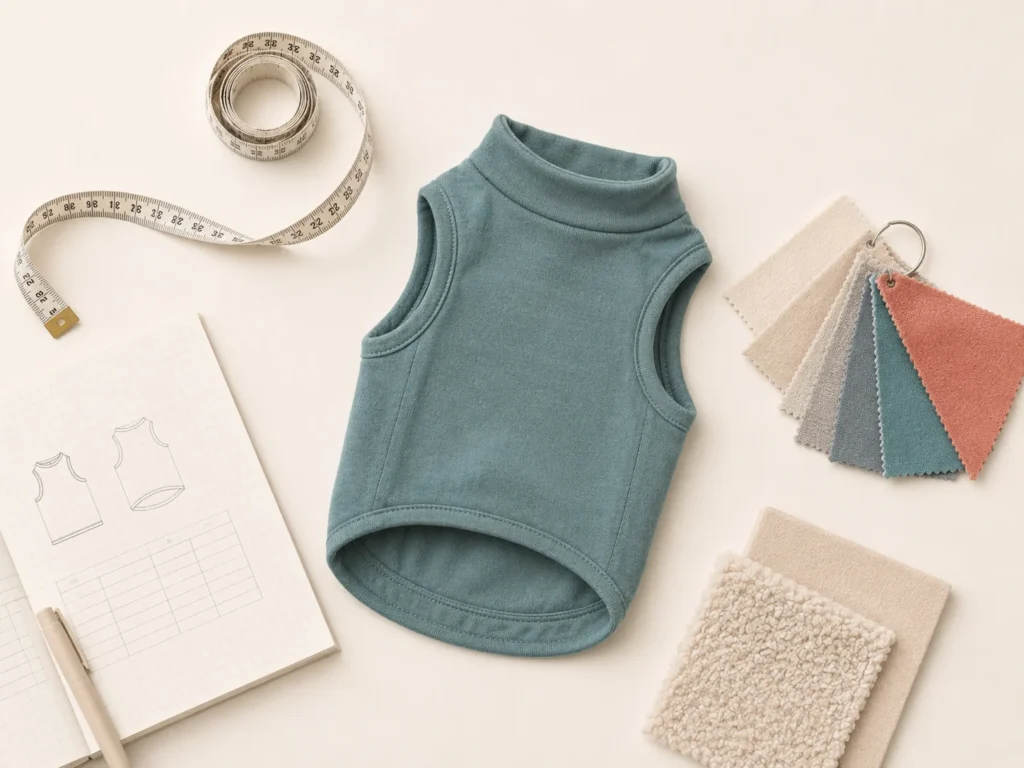
Product construction can affect MOQ because different styles may require different levels of preparation before production begins.
A relatively simple garment based on an existing pattern may be easier for a supplier to arrange than a product that needs new pattern development, additional panels, special openings, layered construction or unfamiliar sewing details.
Construction complexity can also influence how many separate materials or trims need to be prepared. A basic pet T-shirt may rely on fewer components than a padded jacket with multiple fabrics, closures, binding and functional details.
This does not mean that a more complex product automatically has a high MOQ. The important point is that additional development and production requirements can change the way a supplier evaluates the project.
When comparing options, buyers should therefore confirm whether a quotation is based on an existing style, a modified existing style or a new custom construction.
2. Fabric Availability
Fabric availability is one of the most important variables behind pet apparel MOQ.
If a supplier can use a material that is already available through its normal sourcing channels, the order may be easier to arrange. When a project requires a specific fabric composition, weight, stretch level, texture, finish or performance feature, additional sourcing may be necessary.
The fabric supplier can also have its own purchasing requirements. This is why the product MOQ and the material purchasing requirement are not always the same thing.
For example, a pet apparel supplier may be willing to produce a certain quantity of garments, but a specially requested fabric may require a larger material purchase than the finished order actually consumes. In that situation, the material requirement can become one of the factors shaping the commercial discussion.
Buyers can reduce unnecessary uncertainty by defining which fabric characteristics are essential and which can remain flexible. A reference fabric, target composition, approximate weight or clear functional requirement is often more useful than asking for a material that must match an unspecified sample exactly.
3. Color Requirements
Color requirements can affect how an order is divided across materials and production.
A single colorway using an available fabric may be relatively straightforward. Multiple colors, specially matched colors or different combinations of fabric and trims can create additional purchasing and production requirements.
For this reason, a total order quantity does not always tell the full story. An order of 300 pieces in one color and an order of 300 pieces divided across several colors may require different arrangements, even when the total quantity is the same.
Buyers should therefore confirm whether the MOQ applies to the total order, each style, each colorway or a particular material combination. The answer can vary depending on the product and supplier setup.
If exact color matching is important, it should also be clarified early. Custom-dyed fabrics, specially colored trims or branded components may each introduce their own requirements.
How Different Requirements Can Affect MOQ
| Requirement | Simpler Order Structure | More Customized Order Structure |
| Product style | Existing / available style | New custom construction |
| Fabric | Available material | Special material requirement |
| Colors | Fewer colorways | Multiple custom colors |
| Branding | Basic or no branding | Multiple custom brand components |
| Size mix | Simpler size distribution | Broader or uneven size breakdown |
These are general planning directions rather than fixed MOQ rules. The actual order structure depends on the supplier, material availability and the specific project requirements.
4. Custom Labels and Trims
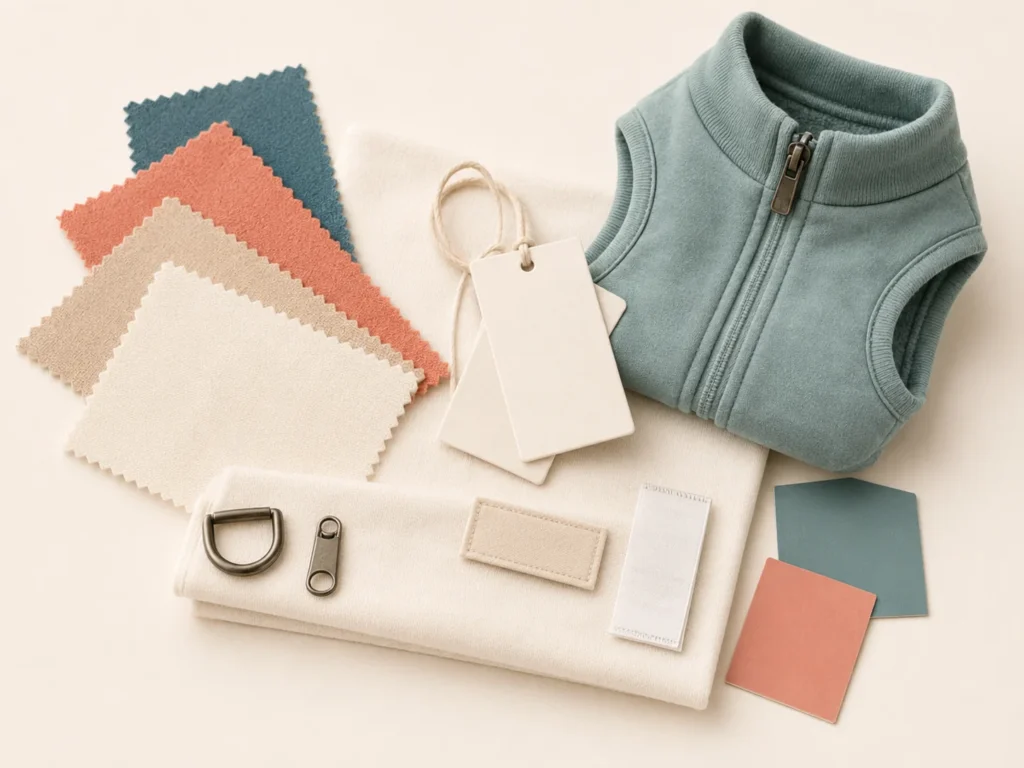
Branding requirements can introduce additional components that are separate from the garment itself.
Common examples include woven labels, care labels, hangtags, logo patches, printed branding, custom zipper pulls and packaging components. Each item may be produced by a different supplier or require its own preparation.
This creates an important distinction for buyers: the MOQ of the finished pet apparel and the MOQ of a branding component may not be the same.
A garment supplier may be able to arrange the product quantity you need, while a custom label, hangtag or packaging item may have a different production requirement. This is one reason private label projects should be evaluated as a complete brand-ready product rather than only as a garment order.
For early-stage brands, it can therefore be useful to separate essential branding requirements from optional ones. A simpler first order may use fewer custom components, while later orders can expand the branding system as volume and product range develop.
For a broader look at labels, hangtags and brand-ready presentation, see our Private Label service.
5. Size Breakdown
Pet apparel adds another important variable that is easy to overlook: size distribution.
A total order may need to be divided across XS, S, M, L, XL or additional sizes. The way the total quantity is distributed can matter because each size requires its own cutting and production planning.
A relatively balanced size mix may be easier to arrange than a highly uneven breakdown where only a very small quantity is required in certain sizes.
Some products can also use different amounts of material across the size range. Larger sizes may require different cutting layouts, while very small sizes can create their own handling considerations.
This is why buyers should not only confirm the total MOQ. They should also ask how flexible the supplier can be with the size breakdown.
For a first order, it is usually helpful to prepare an estimated size ratio even if the final quantities are not yet confirmed. This gives the supplier a clearer basis for evaluating the project.
6. Supplier Production Setup
MOQ can also depend on how a supplier organizes production.
Different suppliers may have different equipment, workforce arrangements, material sourcing channels and production schedules. A style that fits naturally into one supplier’s existing production may be less convenient for another supplier to arrange.
Current production planning can also matter. A supplier already producing similar products may be able to integrate an order differently from a supplier that needs to prepare a completely new setup.
This is one reason there is rarely a reliable universal MOQ that applies to every pet apparel supplier.
For buyers, the practical goal is not necessarily to find the supplier with the lowest possible MOQ. It is to find a production setup that reasonably matches the product requirements, expected quantity, customization scope and future order potential.
When evaluating sourcing options, MOQ should therefore be considered together with product capability, communication, sampling, quality expectations and production coordination.
7. Existing Styles vs Custom Development
One of the clearest ways to understand MOQ is to separate two common sourcing routes: working from an existing style and developing a more customized product.
Existing or Available Style
An existing style can be suitable when the buyer is comfortable with the basic product construction and mainly needs adjustments such as colors, labels, hangtags or packaging.
Because the underlying product already exists, less development work may be required before sampling or production.
This route can be useful for buyers who want to test a category, launch a smaller assortment or reduce unnecessary development complexity.
Custom Development
Custom development is more appropriate when the product itself needs meaningful changes.
This may include a new pattern, different construction, a reference-based design, specific fabrics, custom trims, functional changes or more detailed brand requirements.
A customized route gives buyers more control over the final product, but it also introduces more variables that need to be confirmed before production.
Neither route is universally better. The suitable path depends on how much of the product needs to change and which requirements are most important to the project.
If your project requires a new construction or more specific product development, learn more about our custom pet apparel development approach.
BEFORE REQUESTING MOQ
What Buyers Should Confirm First
- Product type or reference style
- Existing style or custom development
- Preferred materials
- Color requirements
- Size range and estimated breakdown
- Logo and label requirements
- Packaging requirements
- Approximate total order quantity
The more clearly these requirements are defined, the easier it becomes to compare supplier responses on a similar basis. Buyers do not need every detail finalized before making contact, but a basic project brief can prevent many misunderstandings during the first sourcing discussion.
What to Consider Beyond MOQ
MOQ is only one part of a sourcing decision. Buyers may also need to compare available product options, customization scope, sampling requirements, quality expectations and supplier coordination before deciding which route is suitable for a project.
If you are still comparing pet apparel options before requesting pricing, you can start with our Pet Apparel sourcing page.
Key Takeaways
- Pet apparel MOQ usually reflects several connected product and production variables rather than one universal number.
- Existing styles and custom development can require different sourcing and production arrangements.
- Materials, colors, size breakdown and branding components can each affect how an order is structured.
- Buyers can get more useful MOQ guidance when they provide suppliers with a clearer product brief.